The file itself
Your log,
then the verdict.
A look inside, blurred on purpose. The verdicts are real. Your numbers and your rules are yours when you buy.
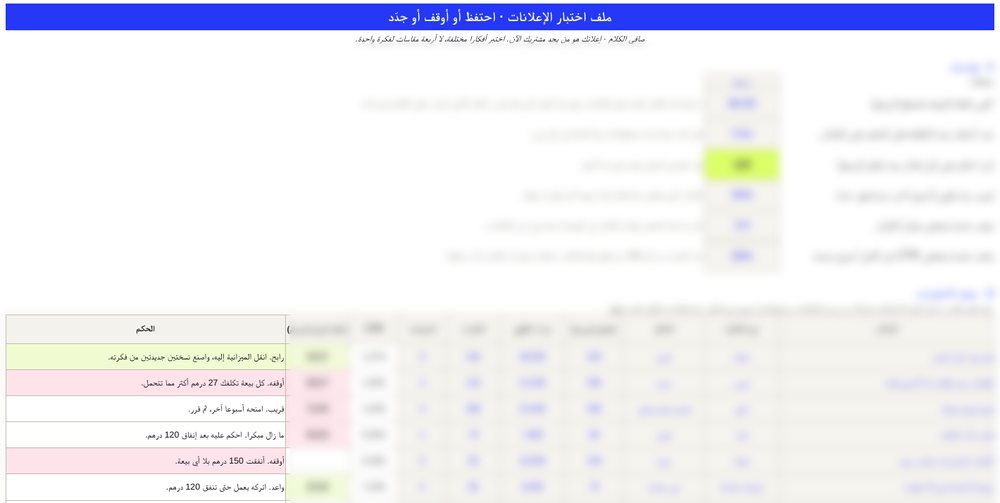
On Meta, the ad itself now finds the buyer, so the ideas you test decide who sees you. This file logs every ad, tells you which to keep, which to turn off and which are getting tired, and checks that you are testing different ideas, not four sizes of one. In Arabic and English.
14 days to change your mind. Open the file, decide, no questions.
Most stores test the same idea as a square, a story and a landscape, and call it four tests. The platform sees one idea, shows it to the same people, and the cost per sale climbs.
Then a good ad gets turned off after two bad days, and a weak one runs for a month because nobody wrote the rule down. This file writes the rule down for you, before you spend.
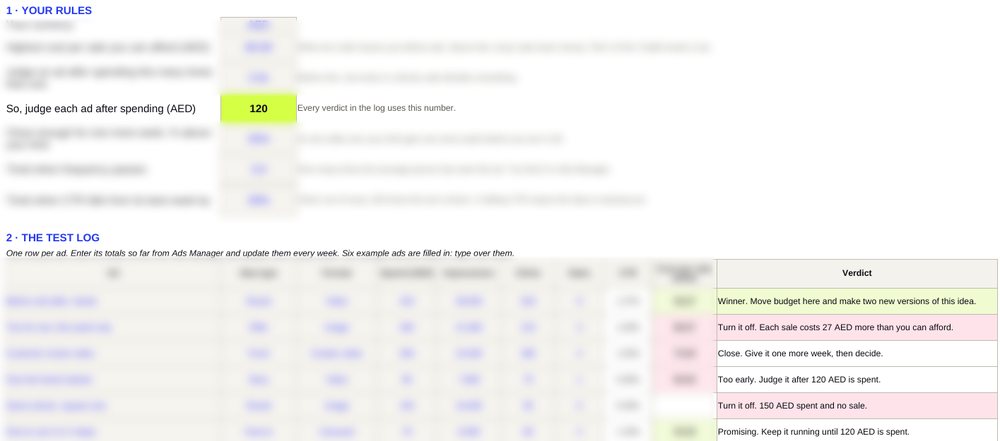
What a sale can cost you, when an ad has spent enough to judge, and when an ad counts as tired. Every verdict follows these rules.
One row per ad, and every row gets a verdict in plain words: winner, one more week, turn it off, or too early to judge.
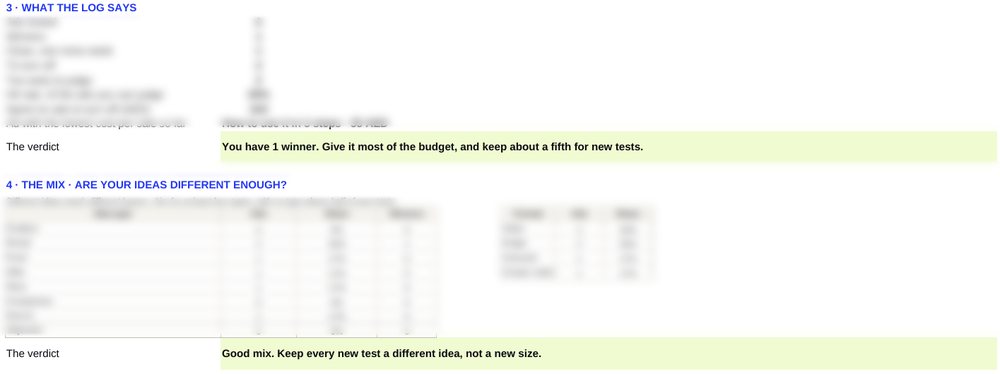
Your winners, your hit rate, what you spent on ads that lost, and the ad with the lowest cost per sale.
Eight types of idea, from problem to proof to offer. The file warns you when one type takes over, or when you have tested too few.
Frequency and CTR week by week, and a warning to make a fresh version before the cost per sale climbs.
A planner for your next ideas, a first line to start each type of idea, and eight rules that keep tests honest.
A look inside, blurred on purpose. The verdicts are real. Your numbers and your rules are yours when you buy.
It will not make a weak product sell. It stops you turning off good ads too early, and paying for bad ones for too long.
Sent to you by email, Arabic and English, updates included, and 14 days to change your mind.